Transformations in Craps Dice Handling From Riverboat Origins to Digital Interfaces
Written by Leon Vogel · Sep 15, 2026

Transformations in Craps Dice Handling From Riverboat Origins to Digital Interfaces
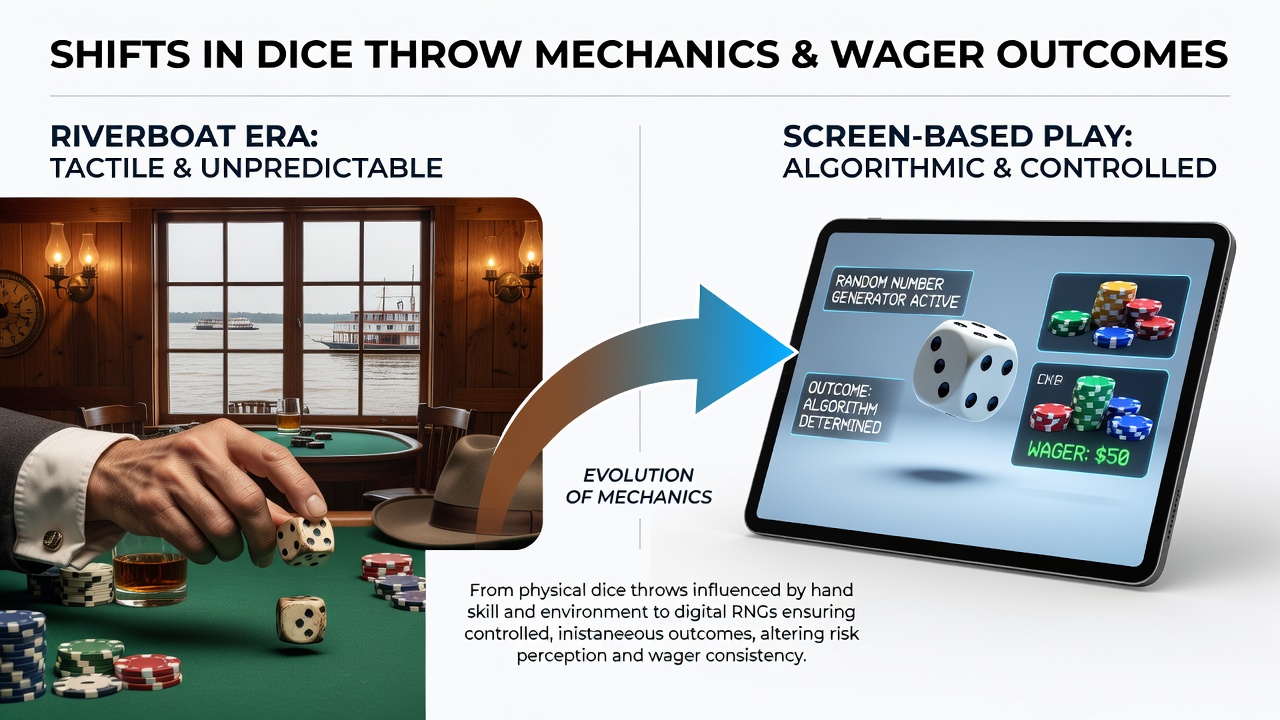
Physical dice throws on 19th-century Mississippi riverboats relied on manual propulsion techniques where players gripped and released dice with specific wrist motions that crews monitored closely for fairness, while screen-based systems in contemporary platforms replace those actions with algorithmic generation that produces outcomes through pseudorandom sequences calibrated to match standard probability distributions.
Riverboat Era Mechanics and Physical Variables
Riverboat operators enforced rules that required dice to hit the back wall of the table after each throw, a practice that introduced friction, rebound angles, and velocity changes as key factors in determining final face values, and historical records from that period show how surface textures along with ambient humidity levels altered roll distances and stopping positions in measurable ways. Crews on these vessels documented instances where consistent throw styles by frequent participants produced clusters of results that deviated slightly from theoretical expectations until equipment inspections restored balance.
Land-Based Casino Adaptations
Transition to fixed casino environments brought standardized tables with uniform felt surfaces and padded walls that reduced some environmental variables yet preserved teh core requirement for physical dice manipulation by players or dealers, and data collected by regulatory bodies such as the Nevada Gaming Control Board indicate that these controlled settings narrowed outcome variance while maintaining the same 36 possible combinations on two six-sided dice. Observers note that dealer-controlled throws in certain table games further standardized release points and spin rates compared with earlier passenger-led practices on boats.
Screen-Based Simulations and Algorithmic Generation
Digital platforms introduced virtual dice rendered on screens where outcomes derive from certified random number generators rather than physical momentum, a shift that eliminated variables like grip pressure, table bounce, and air resistance while preserving exact mathematical probabilities for each total from two through twelve. Research from institutions including the University of Nevada, Las Vegas gaming studies program demonstrates that properly audited RNG systems replicate the uniform distribution of physical dice across millions of simulated rolls, though the absence of tactile feedback changes how participants perceive control over results.
Comparative Effects on Wager Probabilities
Both physical and digital methods yield identical house edges on standard bets when equipment meets regulatory standards, yet the mechanics influence player strategies because physical throws allow observation of release patterns that some attempt to exploit whereas screen interfaces remove any visual cue that might suggest predictable sequences. Figures from Australian gambling research centers reveal that online craps sessions logged between 2024 and 2026 maintained pass line bet win rates near 49.3 percent across large datasets, matching land-based results and confirming that the core 1.41 percent house advantage persists regardless of delivery method.
As of September 2026, several North American jurisdictions have updated testing protocols for RNG certification that require continuous monitoring of sequence independence, which further aligns digital outcomes with the statistical properties long established in physical dice environments. Those who study these systems point out that wager outcomes remain governed by the same combinatorial mathematics, so shifts in throw mechanics alter presentation and user interaction without modifying underlying payout structures.
Regulatory Oversight Across Regions
Canadian provincial authorities and European gaming commissions apply similar certification standards that mandate third-party audits of virtual dice generators, ensuring that screen-based results withstand scrutiny comparable to inspections performed on riverboat and casino dice sets, while industry reports from trade associations document how these requirements have standardized fairness metrics globally. Players encounter consistent odds whether engaging at physical tables or through digital interfaces because regulators tie approval to verified probability models rather than delivery format.
Conclusion
Mechanics of dice delivery evolved from manual riverboat throws influenced by physical conditions to algorithm-driven screen displays that remove those variables, yet wager outcome distributions stay aligned with established probabilities under proper oversight. Data from regulatory and academic sources confirm that certified systems, whether physical or digital, produce equivalent results for established bet types, allowing focus on rules and bankroll management rather than delivery method when evaluating expected returns.