Regulatory Shifts Transforming Dice Mechanics Across Virtual Platforms
Written by Drew Vogel · Nov 24, 2026
Regulatory Shifts Transforming Dice Mechanics Across Virtual Platforms
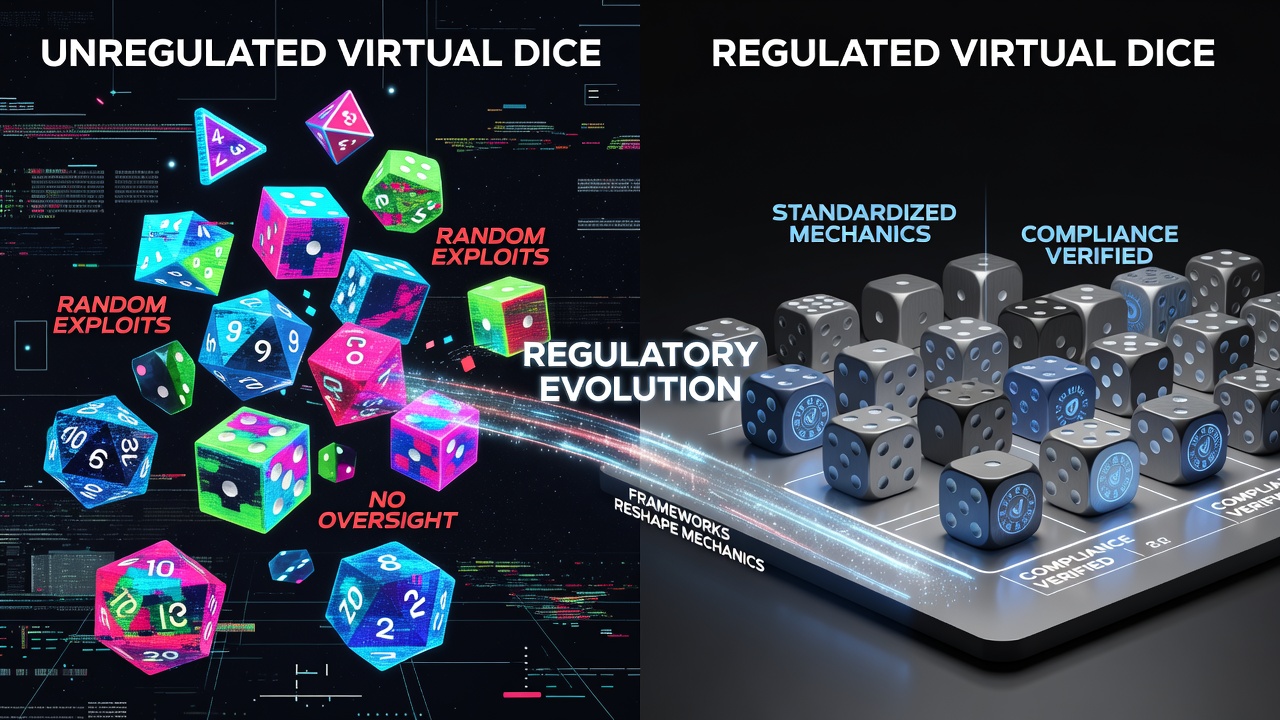
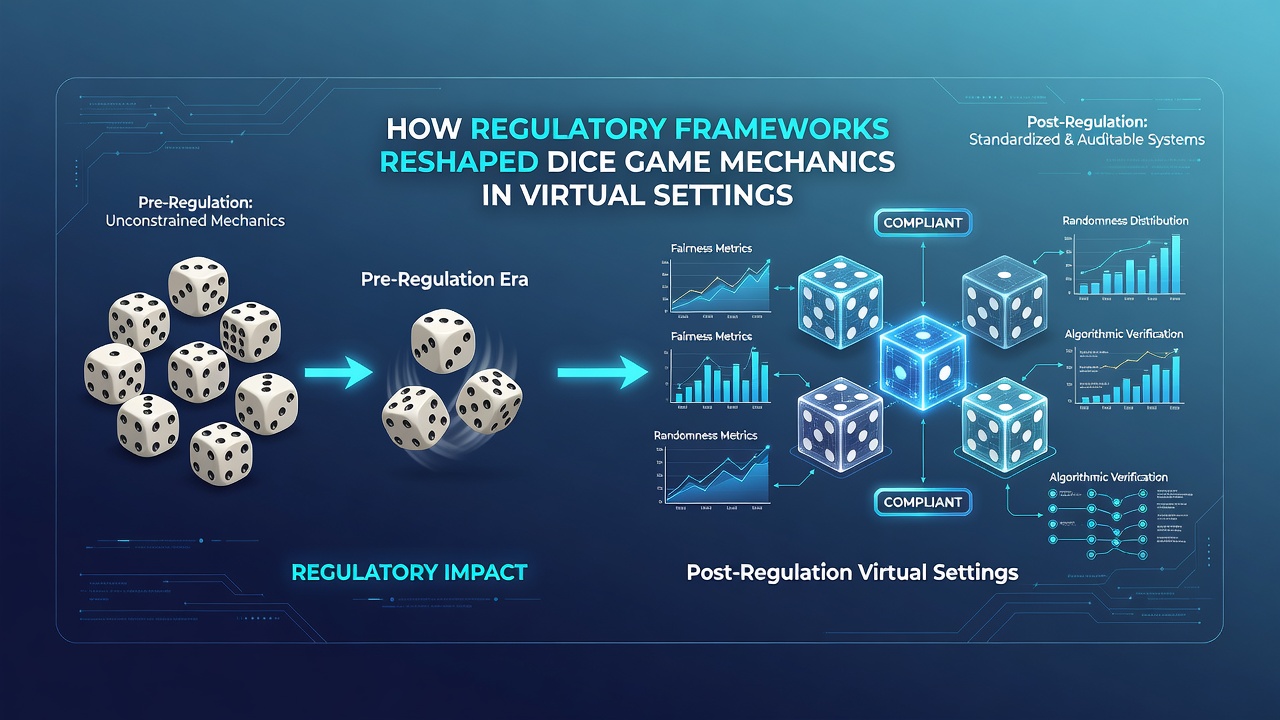
Regulatory frameworks in multiple jurisdictions have driven measurable adjustments to dice game mechanics within virtual environments, and data from licensing bodies shows these changes began accelerating after 2018 in key markets. Authorities in the United States, Canada, and parts of Europe introduced rules that required certified random number generators, specific payout disclosures, and restrictions on certain in-game features that previously allowed rapid successive rolls without verification pauses. Those who've tracked licensing applications note that operators responded by altering core elements such as bet progression options and dice animation speeds to meet compliance standards.
Early Regulatory Milestones and Initial Adaptations
State-level gaming commissions in Nevada and New Jersey established baseline requirements for virtual dice products during the mid-2010s, yet broader international standards emerged later when multiple European countries aligned on technical specifications for fairness testing. Data indicates that these early mandates forced developers to replace proprietary algorithms with externally audited systems, and game logs had to be retained for periods ranging from six months to five years depending on the jurisdiction. One licensing report from the Nevada Gaming Control Board revealed that over 120 virtual dice variants underwent re-certification between 2019 and 2022 because original mechanics failed new audit criteria for outcome independence.
Technical Adjustments to Randomness and Payout Structures
Certified RNG standards now require virtual dice to demonstrate statistical independence across millions of simulated rolls, and this requirement eliminated certain legacy features that combined player history with outcome weighting. Figures from industry testing laboratories show that house edge calculations became fixed within narrower bands in regulated markets, typically between 1.36 and 1.41 percent for standard pass line bets, while bonus rounds faced additional scrutiny over trigger probabilities. Developers integrated visible audit seals directly into game interfaces, and animation sequences were slowed in several titles to allow clear display of each dice result before the next wager could be placed. Observers note that these visual and timing modifications stemmed directly from rules aimed at preventing automated play patterns that bypassed responsible gambling prompts.
Regional Variations in Feature Restrictions
Canadian provincial regulators implemented rules in 2023 that limited autoplay sequences to a maximum of ten consecutive rolls before mandatory confirmation, and similar caps appeared in Australian frameworks the following year. In contrast, several U.S. states focused on session time reminders that interrupt dice sequences at thirty-minute intervals, requiring players to acknowledge continued participation. Research from the University of Nevada's gaming studies department indicates these interruptions reduced average session lengths by approximately 12 percent in monitored environments, although aggregate wager volumes remained stable because operators adjusted minimum bet thresholds downward in some cases. European authorities further required that any dice game displaying progressive elements must separate the base game RNG from any pooled jackpot contributions, which led to redesigned interfaces separating standard rolls from side-feature accumulators.
Impact on Bonus Mechanics and Player Controls
Bonus structures tied to dice outcomes encountered new limitations after 2024 when several jurisdictions required clear separation between promotional funds and standard gameplay balances. Operators introduced distinct wagering categories for bonus dice rolls, and data from compliance filings shows that features allowing dice results to carry over across multiple rounds were removed or reconfigured to reset after each spin cycle. Those monitoring platform updates report that customizable dice skins and sound effects remain available in most titles, although regulators in certain regions now require default neutral presentations to avoid any implication of influence over outcomes. Additional controls emerged around quick-bet buttons, with some frameworks mandating that each wager receive an explicit confirmation step rather than allowing stacked inputs from rapid clicks.
November 2026 Developments and Ongoing Compliance Trends
By November 2026 several new technical standards had taken effect across multiple North American markets, and these standards emphasized real-time reporting of dice outcome distributions to central regulatory servers. Operators adjusted backend systems to transmit anonymized roll data at fifteen-minute intervals, and game mechanics incorporated buffer periods between rounds to accommodate the transmission process without noticeable lag for players. Industry associations such as the European Gaming and Betting Association published guidance documents outlining how existing titles could be patched to meet the new reporting thresholds while preserving core dice probabilities. Academic papers examining these updates, including work from Canadian university research teams, highlight that the combination of transparency mandates and feature restrictions produced more uniform mechanics across platforms even as visual themes continued to vary widely.
Conclusion
Regulatory frameworks continue to influence virtual dice game design through requirements for certified systems, controlled feature sets, and documented outcome reporting, and the cumulative effect appears in standardized payout tables, modified autoplay options, and integrated compliance displays across licensed platforms. Data collected through 2026 demonstrates that these adjustments occurred incrementally as new rules were adopted region by region, resulting in mechanics that prioritize verifiable fairness while retaining the fundamental structure of dice-based wagering. Further changes are expected as additional jurisdictions finalize their technical specifications and as existing operators refine their implementations to align with evolving standards.